travel hair straightener mini is one of those tools you don’t think you need until you’re standing in a hotel bathroom, fighting frizz, bent ends, or a weird crease from sleeping on damp hair.
Touch-ups are a different job than a full styling session, you want speed, control, and a finish that looks intentional, not “I panicked and clamped my hair for 10 minutes.” A small iron can be perfect for that, but only if the plate size, heat behavior, and power setup match how you actually travel.
This guide walks through what mini straighteners do well, where they struggle, how to choose one for your hair type, and a simple routine for quick fixes without overcooking your ends.
What a Mini Straightener Is Actually Good For (and What It’s Not)
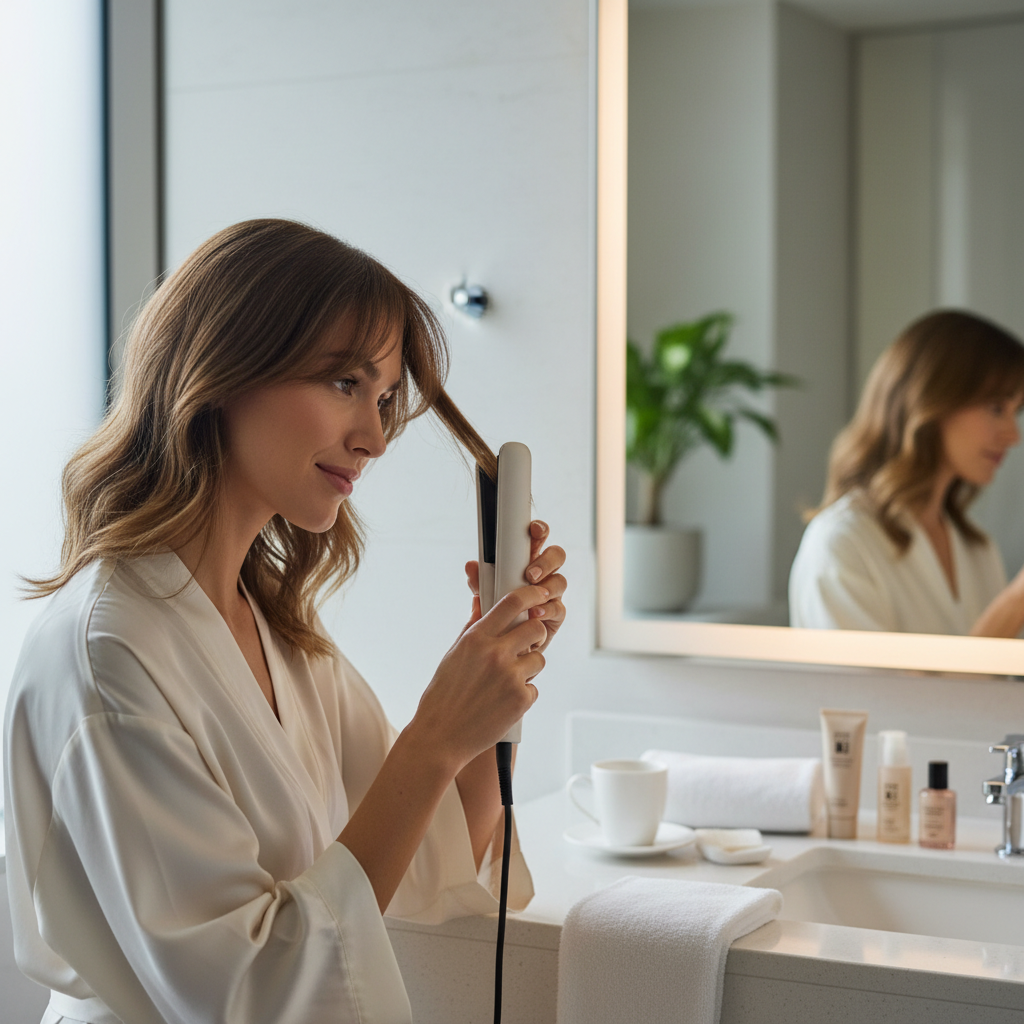
Most people buy a small iron for one of three reasons: suitcase space, quick morning fixes, or keeping bangs and face-framing pieces in line. That’s the sweet spot, small sections, small movements, fast results.
Where expectations go sideways is using it like a full-size tool on thick or very long hair. You can do it, but it often becomes slow, repetitive passes, and that’s when hair starts looking dull.
- Great for: bangs, flyaways, smoothing the top layer, ends that flip out, curl refresh, beard edges for some users (carefully), short hair and bobs.
- Okay for: shoulder-length hair touch-ups, quick root smoothing (light pressure).
- Not ideal for: full straightening on dense curls/coils, one-pass sleek looks on thick hair, replacing a high-performance full-size iron.
Why Touch-Ups Go Wrong When You Travel
If your hair behaves perfectly at home and then turns chaotic on a trip, it’s usually not “bad hair,” it’s the environment plus rushed technique.
- Humidity and hard water: hotel showers and different water mineral content can make hair swell or feel coated, which changes how heat styling lands.
- Heat tool compromises: many mini tools have smaller heaters, so temperature may dip as you work, leading to extra passes.
- Dryness from travel: airplane air and sun can make ends brittle, and a quick clamp can turn into a crispy bend.
- Rushed sectioning: touch-ups still need small sections, even if you’re only fixing five minutes’ worth of hair.
Buying Checklist: How to Pick the Right Travel Mini
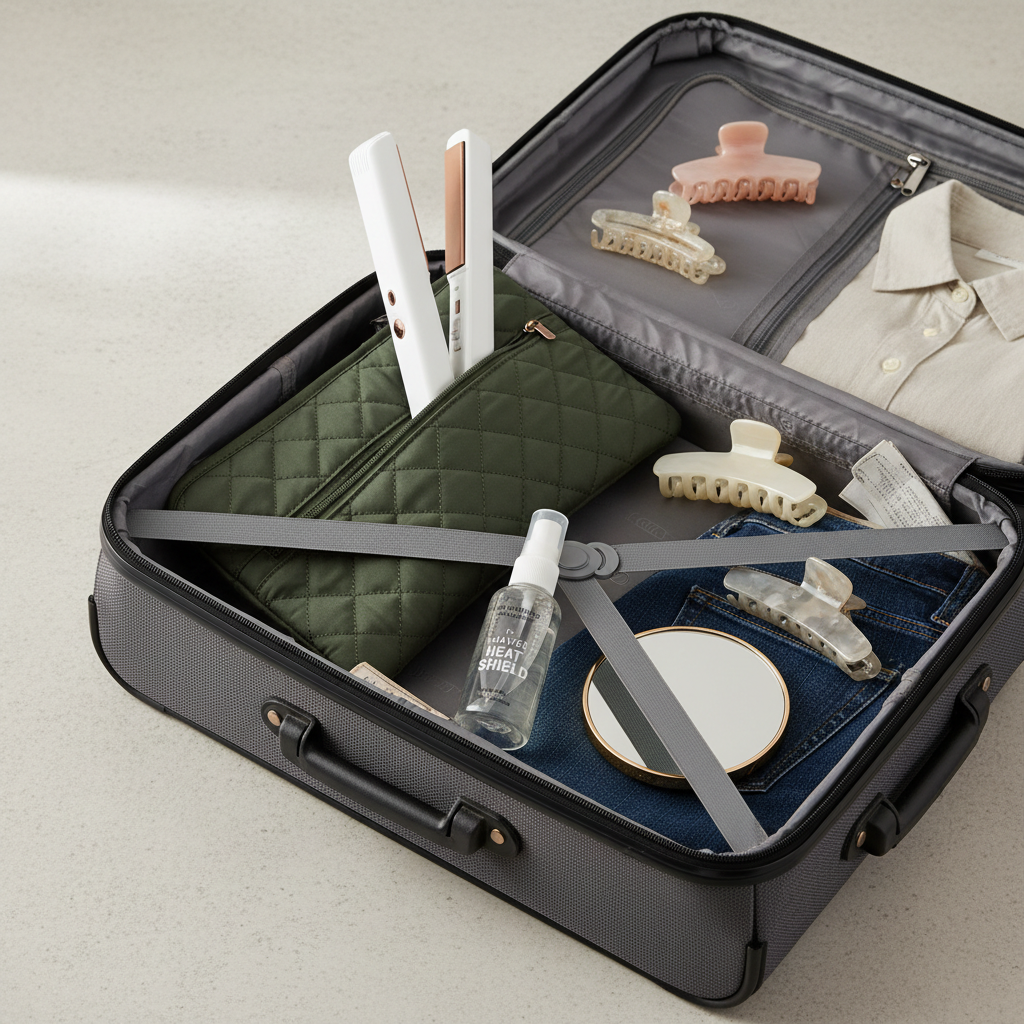
Before you pick based on “cute and small,” decide what you’ll really use it for: bangs, smoothing, or full styling. Then match features to your hair.
1) Plate width and shape
Narrow plates give control near the roots and around the hairline, and they’re easier for touch-ups. Slightly rounded edges help if you also want to bend ends or create a loose wave.
- Short hair/bangs: very narrow plates often feel easiest.
- Long hair touch-ups: a slightly wider mini plate reduces time.
2) Temperature behavior, not just “max heat”
One reason a travel hair straightener mini can feel “weak” is heat recovery, how fast it gets back to temp between sections. If the tool forces multiple slow passes, the practical heat exposure can rise even if the setting seems modest.
According to the American Academy of Dermatology (AAD), using heat protectant and choosing the lowest effective heat helps reduce heat damage risk, which matters even more when you’re doing quick fixes day after day on a trip.
3) Voltage and plug realities
For US-only travel, standard voltage is simple. For international trips, look for dual voltage (often 100–240V) and remember: a plug adapter changes the shape of the plug, not the voltage.
- Domestic travel: most minis work fine.
- International: dual voltage is the cleaner option, otherwise you may need a voltage converter, which can be bulky and finicky.
4) Cord length, swivel, and travel cap
These sound minor until you’re contorting around a mirror with one outlet behind a sink. A swivel cord and a heat-resistant cap or pouch make packing less stressful.
Quick Comparison Table: What to Prioritize by Hair Type
Hair is personal, and these are general patterns, but they help narrow the shopping list fast.
| Hair type / goal | Best mini features to prioritize | What to watch out for |
|---|---|---|
| Fine hair, quick smoothing | Lower heat options, consistent temp, narrow plates | High heat spikes can cause flat, fried ends |
| Medium hair, daily touch-ups | Fast heat-up, good recovery, rounded edges | Too-small plates can make sessions drag |
| Thick hair, limited time | Better heater, slightly wider plates, stable temperature | Cheap minis often require many passes |
| Curly/wavy, frizz control on top layer | Controlled heat, smooth plates, good grip | Chasing “super straight” can increase damage risk |
| Bangs and face-framing pieces | Very narrow plates, precise tip, quick on/off | Over-clamping near the roots leaves a visible kink |
How to Do Touch-Ups in 5–10 Minutes (Without Overstyling)
The goal is not perfect hair, it’s “camera-ready” hair. Pick a few zones and stop.
Step-by-step routine
- Start on fully dry hair. If hair feels damp, wait. Heat on damp strands can increase breakage risk in many cases.
- Mist heat protectant lightly. Focus on the outer layer and ends, not the scalp.
- Clip into 2–3 sections. Even for touch-ups, sectioning prevents repeated passes.
- Fix the top and hairline first. Smooth flyaways with gentle tension, small sections.
- Refine ends last. A slight bend inward or outward looks more intentional than pin-straight ends.
- Cool-down moment. Give hair 30–60 seconds before brushing or adding oil, it helps the shape hold.
Two small technique tweaks that make a big difference
- Use one controlled pass whenever possible. Multiple quick passes often cause more friction than one slower pass.
- Reduce pressure. Many people clamp too hard with minis because the plates look small; light pressure plus tension usually works better.
Packing, Safety, and Travel Rules People Forget
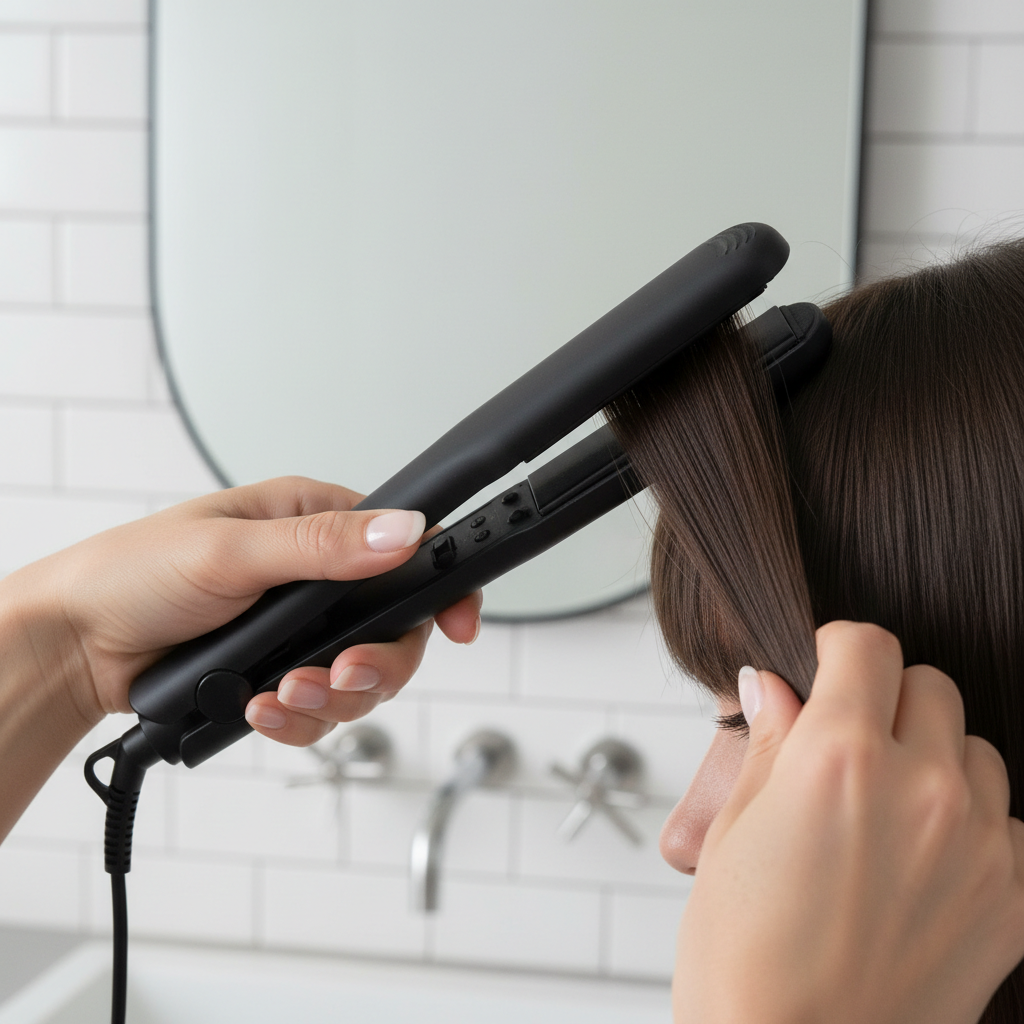
A mini tool is easier to toss in a bag, which also means it’s easier to pack unsafely. A couple habits prevent scorched fabric and outlet drama.
- Let it cool fully before packing. If you must move fast, use a true heat-resistant pouch and keep it away from plastic items.
- Don’t wrap the cord tightly. Tight wrapping near the base can stress wiring over time.
- Check hotel wattage quirks. Some bathrooms have shaver-only outlets, use a standard outlet if the tool won’t power on.
- International trips: confirm dual voltage before plugging in. If you’re unsure, pause and check the label, this is where tools get fried.
- Heat and scalp comfort: if you have scalp conditions or sensitivity, lower heat and fewer passes usually feel better, and it may be worth asking a dermatologist or stylist for tailored guidance.
Key Takeaways Before You Buy (or Pack) One
- A travel hair straightener mini shines for targeted touch-ups, not always for full styling on thick hair.
- Look beyond max temperature, consistent heat and recovery reduce the temptation to over-pass sections.
- Match plate size to your most common use case: bangs and edges need precision, long hair needs efficiency.
- Dual voltage matters for international travel, and an adapter is not the same as a converter.
Conclusion: A Mini Straightener Is a “Fix It” Tool, Not a Miracle Tool
If your goal is to tame a few stubborn pieces, smooth the crown, or make ends look polished before dinner, a mini iron earns its spot in the bag. If you expect it to replace your full-size tool for heavy-duty straightening every day, you might end up frustrated and doing too many passes.
Pick a model that matches your real routine, pack it safely, and keep your touch-ups selective. That’s the difference between “travel hair” and “I look like I planned this.”
FAQ
- Is a travel hair straightener mini strong enough for thick hair?
It can be, but many thick-hair users do best with a mini that has stable heat and slightly wider plates. If you need lots of passes, it may be smarter to do partial touch-ups only. - Can I use a mini straightener to create curls or waves?
Usually yes, especially if the plates have rounded edges. Keep sections small and don’t clamp too hard, minis tend to create sharper bends if you rush. - How do I avoid kinks when fixing bangs?
Use less pressure and move continuously, then add a tiny bend at the ends rather than clamping at the root. A quick comb-through after cooling helps. - What temperature should I use while traveling?
It depends on your hair and tool settings, but the lowest effective heat is a good rule. If you smell “hot hair,” or ends look dull fast, dial down and reduce passes. - Do I need dual voltage if I’m traveling within the US?
No, not usually. Dual voltage becomes important when you leave North America, because different countries supply different voltages. - Can I pack a mini straightener in a carry-on?
In many cases, yes, hair tools are commonly allowed, but rules can change by airline and route. If it’s critical for your trip, check current TSA guidance and your airline policy. - What’s the fastest way to refresh frizz without restyling everything?
Light heat protectant, smooth only the top layer and hairline, then finish with a tiny amount of serum on ends. Doing the whole head often wastes time and adds heat exposure.
If you’re trying to choose a travel hair straightener mini that fits your hair type and the way you actually travel, it can help to list your top two use cases, bangs control, end smoothing, quick wave refresh, then match features to that instead of buying the smallest tool you see.