
how to dress in dubai for tourists comes down to one practical idea: aim for polished, breathable, and a bit more covered than you might wear in Miami or LA, then adjust based on where you’re going that day.
Dubai is modern and style-forward, but it also sits in a region where modesty still matters in certain public spaces, especially around government buildings, older neighborhoods, and places of worship. Most tourist discomfort comes from not knowing when rules are strict and when they’re just “read the room.”
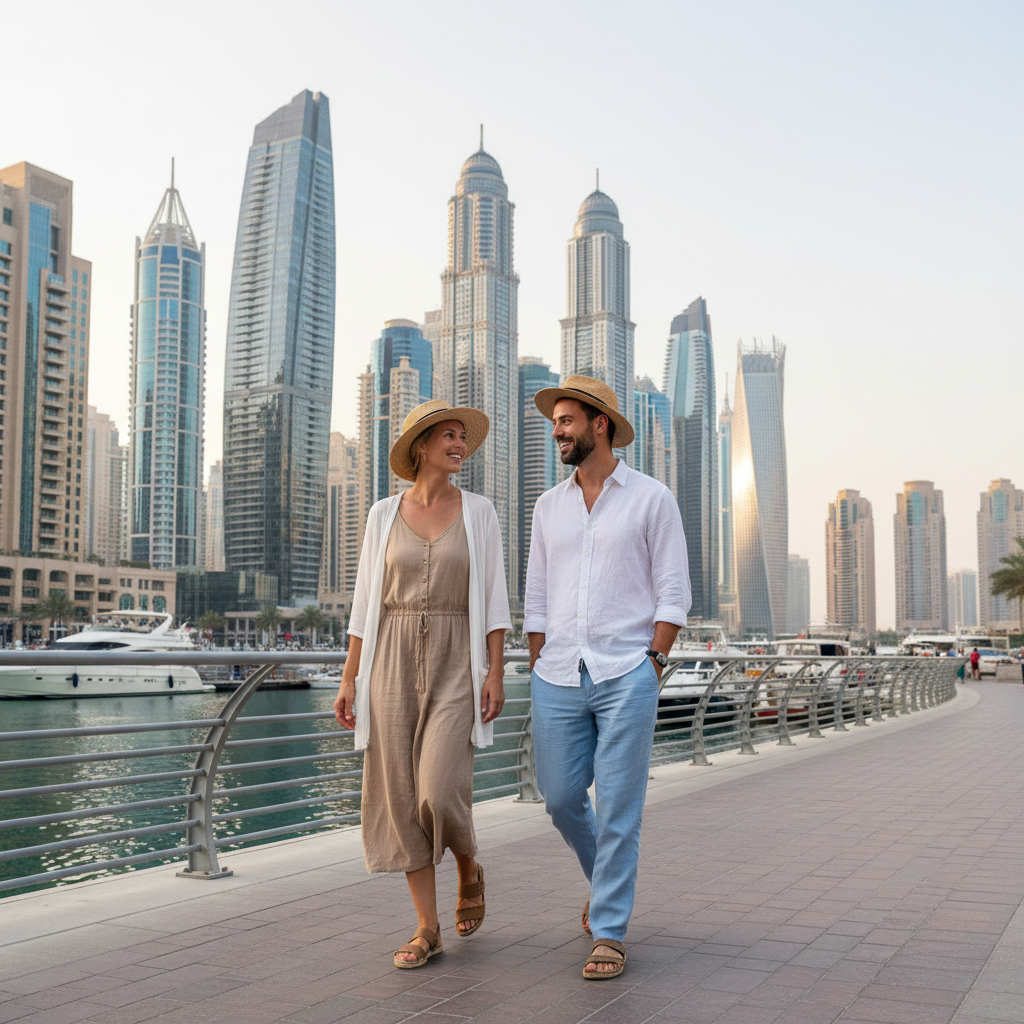
This guide gives you outfit ideas by location, a quick self-check, and a packing list that works for malls, mosques, beaches, and desert tours, without overthinking it.
Dubai dress code in plain English (what’s expected vs. what’s required)
In many places, there is no “tourist uniform” and people wear everything from streetwear to designer evening looks. The key is understanding the difference between social expectations and enforced rules.
- Most public areas (malls, restaurants, streets): Modest, tidy clothing is expected. You’ll rarely be stopped, but you might get looks or be denied entry to a venue if you’re very revealing.
- Mosques and religious sites: Modesty rules are typically enforced. Women often need arms and legs covered and hair covered; men usually need long pants and covered shoulders.
- Beaches and hotel pools: Swimwear is normal, but keep it at the beach or pool area, not in the mall right after.
- Nightlife: Dubai can feel like a big-city dress-up scene, but ultra-revealing outfits can still backfire at entrances.
According to the Dubai Department of Economy and Tourism, visitors are encouraged to dress modestly in public places, especially in traditional areas and places of worship. That wording matters: it’s guidance, but it can affect your experience.
Why tourists get dress code wrong (common real-world situations)
Most issues aren’t about someone “breaking a law,” they’re about comfort, access, and avoiding awkward moments.
- Heat + air-conditioning whiplash: Outside is hot, indoors can be aggressively cold. Tourists dress for one and suffer in the other.
- One outfit for five settings: The same look might be fine at a beach club but feel out of place in Old Dubai or a family mall.
- Misreading “modern city”: Dubai is modern, yes, but it’s still a Middle Eastern city with cultural norms that vary by neighborhood and venue.
- Social media expectations: People pack for photos, not for walking, sun, and respectful entry policies.
If you’re searching how to dress in dubai for tourists because you fear doing something “wrong,” the more useful goal is simple: dress so you can enter anywhere without having to change, then add bold pieces when the setting supports it.
Quick self-check: what are you doing today?
Use this mini checklist each morning. If you say “yes” to any item, lean more modest and bring a layer.
- Going to a mosque, heritage district, or government office
- Visiting a mall for several hours (cinema, dining, shopping)
- Planning to use public transport (Metro, tram, buses)
- Meeting locals for business, a tour guide, or a family-style experience
- Hopping from beach/pool straight to a restaurant
Rule of thumb: If your shoulders and midriff are covered and your shorts aren’t very short, you’re usually in the safe zone for most public places.
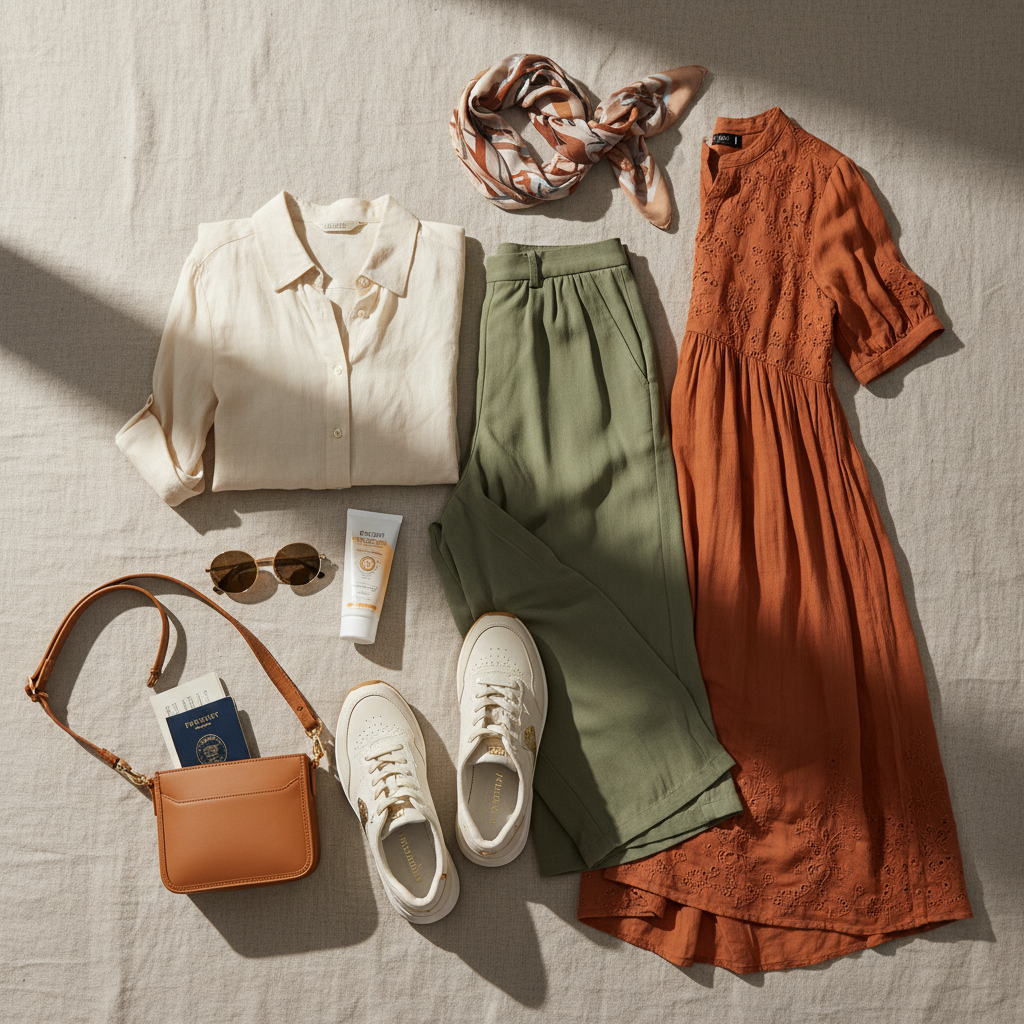
What to wear by place: malls, Old Dubai, mosques, beach, desert
Malls and city sightseeing
For malls and general sightseeing, aim for “neat casual” that covers shoulders and avoids super-short hems.
- Women: Midi dress, maxi skirt, linen pants, jeans, tops with sleeves, light cardigan or blazer for A/C.
- Men: Chinos or jeans, polo or T-shirt with sleeves, casual button-down. Bring a light layer indoors.
- Shoes: Comfortable sneakers or sandals with secure straps. You’ll walk more than you expect.
Old Dubai, souks, and traditional neighborhoods
In Deira, Bur Dubai, and souks, dressing a little more modest tends to make interactions smoother and photos feel more respectful.
- Looser fits, longer shorts or pants, covered shoulders
- A light scarf can help with sun, dust, and quick coverage if you want it
Mosques and religious sites
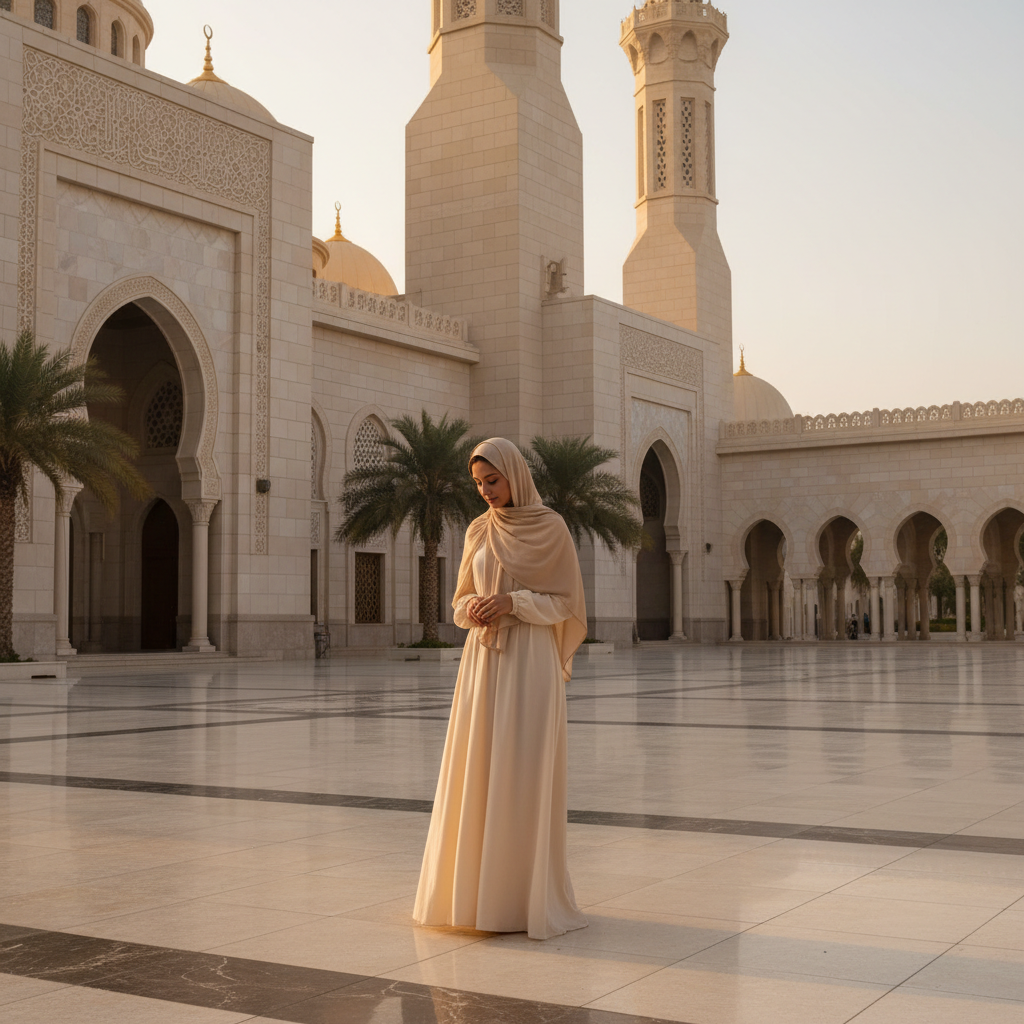
Plan for stricter modesty here. Many major sites provide coverings, but it’s still smart to arrive prepared.
- Women: Long sleeves, long pants or ankle-length skirt, and a headscarf. Avoid sheer fabric.
- Men: Long pants and sleeves that cover shoulders. Skip tank tops.
- Both: Simple, non-transparent clothing; remove shoes when required.
Beaches, pools, and beach clubs
Swimwear is normal at the beach and pool. The common mistake is walking through malls or public promenades in a bikini top with no cover-up.
- Bring a cover-up shirt, kaftan, or easy dress
- Keep swimwear inside beach/pool areas
Desert safaris and outdoor tours
Desert tours are about sun, sand, and movement. Dress for comfort and wind, not just heat.
- Breathable long sleeves (sun protection), light pants, closed-toe shoes if you dislike sand
- Sunglasses and a hat; a scarf helps with dust
Outfit ideas that work for most tourists (and pack well)
If you want a small set of outfits that cover almost every plan, start here. This is the “no drama” wardrobe that still looks good in photos.
- Women’s easy capsule: 2 breathable tops with sleeves, 1 lightweight cardigan, 2 pants (linen or wide-leg), 1 midi/maxi dress, 1 beach cover-up, 1 scarf.
- Men’s easy capsule: 2 polos or T-shirts, 1 lightweight button-down, 2 pants/jeans, 1 pair tailored shorts (knee-length), 1 light jacket or overshirt.
Key fabrics: linen, cotton, moisture-wicking blends. Avoid anything that turns see-through in sun or clings in humidity.
Packing checklist + a simple “what to bring” table
When people ask how to dress in dubai for tourists, they often really mean “what do I pack so I don’t overpack.” This list keeps you flexible.
- One light layer for A/C (cardigan, overshirt, thin jacket)
- One modest set for religious sites (long sleeves + long bottoms; scarf for women)
- Comfortable walking shoes plus one nicer pair for evenings
- Sun basics: sunglasses, hat, sunscreen
| Situation | What works | What to avoid (often causes hassle) |
|---|---|---|
| Malls & restaurants | Covered shoulders, knee-length shorts or longer, light layer | Very short shorts, see-through tops, beachwear without cover-up |
| Mosques | Long sleeves, long pants/skirt, scarf for women | Tank tops, short skirts, tight/transparent clothing |
| Beach & pool | Swimwear + cover-up for transitions | Walking around public areas in only swimwear |
| Desert safari | Breathable long sleeves, light pants, sunglasses | Heavy denim in peak heat, flimsy shoes if you hate sand |
| Nightlife | Smart casual, dressy but balanced coverage | Extremely revealing outfits that risk door policy issues |
Practical tips that save you time (and awkward moments)
- Carry a scarf or light wrap: It solves sun, A/C, and quick coverage without changing outfits.
- Choose longer shorts: Knee-length (or close) reads appropriate in more places and still feels casual.
- Plan “transition moments”: If you’re going from pool to lunch, pack a cover-up you actually like wearing outside.
- Keep one respectful outfit ready: Even if you don’t plan a mosque visit, plans change.
- When unsure, ask your venue: High-end restaurants and clubs can have their own policies.
Key takeaway: You don’t need to dress conservatively 24/7, but you do want a baseline outfit that works in mixed settings.
When you may want local guidance (tours, events, special situations)
If you’re attending a religious holiday event, visiting during Ramadan, or joining a guided cultural tour, it’s reasonable to ask your host or guide what they recommend. Expectations can shift by neighborhood, time of day, and crowd.
Also, if you have heat sensitivity or a medical condition, choosing coverage for sun protection might be helpful, but you may want to consult a medical professional about safe heat exposure, hydration, and activity planning.
Conclusion: dress for access, comfort, and respect
The easiest way to feel confident is to treat Dubai like a stylish global city with a modesty dial you can turn up when needed. Pack breathable layers, keep one mosque-ready outfit, and use a scarf as your all-purpose backup.
If you want one action step, lay out tomorrow’s outfit with your schedule in mind, then add a light layer and a cover-up option to your bag, that small habit prevents most dress-code stress.