
Indigenous travel tourism can be one of the most meaningful ways to learn about place, history, and living cultures, but it also carries real risk of missteps, tokenization, or money flowing to the wrong hands.
If you have ever wondered, “Is this tour actually community-led?” or “Am I about to treat someone’s culture like entertainment,” you are asking the right questions, and this guide is built around those questions rather than glossy promises.
We’ll walk through how to spot credible Indigenous-owned experiences, what respectful participation looks like on the ground, how to ask for permission without being awkward, and how to make your spending align with your values.
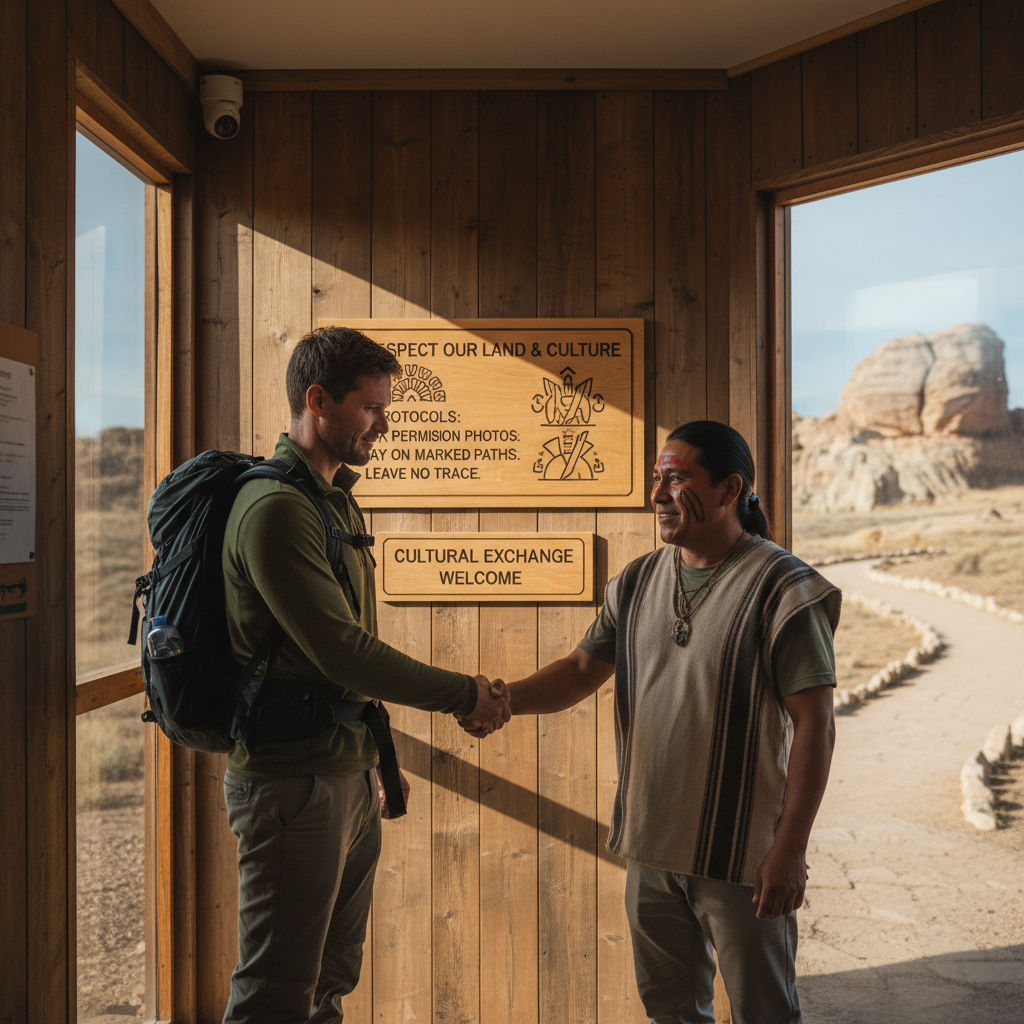
What “respectful” Indigenous travel tourism really means
Respect in this context is less about saying the perfect thing, more about power, permission, and benefit, who controls the story, who sets the rules, and who gains long-term value from visitors.
In many destinations, you’ll see cultural imagery used to sell hotels and excursions that have minimal ties to the nation whose culture appears in the marketing. That gap is where harm happens, often without travelers realizing it.
- Self-determination: the community decides what to share, how, and when.
- Fair exchange: your payment and time support community priorities, not just an outside operator’s margin.
- Accuracy: information reflects living cultures, not stereotypes or “frozen-in-time” narratives.
- Consent: for photos, recording, and access to places with spiritual or family significance.
According to the United Nations, Indigenous peoples have the right to maintain, control, and protect their cultural heritage and traditional knowledge, which is a useful lens for evaluating tourism experiences without turning everything into a debate.
Why people get this wrong (even with good intentions)
Most awkward moments come from assumptions, not malice. The tourism system teaches travelers to expect access, photos, and “authentic” stories on demand, while many communities operate with boundaries that are contextual and sometimes non-negotiable.
Common failure points show up in predictable places:
- Confusing “inspired by” with “run by”: a tour may use Indigenous art motifs but have no revenue share.
- Over-indexing on performance: expecting ceremonies, regalia, or personal histories as a deliverable.
- Content capture culture: treating people and sacred sites as background for social media.
- One-tribe thinking: assuming what’s appropriate in one nation applies everywhere else.
If you want a simple gut check, ask yourself whether you would be comfortable if strangers treated your family traditions as a themed attraction. That discomfort is often the signal to slow down and ask better questions.

Quick self-check: is this experience likely ethical?
Before you book, run a short screening. You won’t get perfect certainty from a webpage, but you can reduce your odds of funding extractive operators.
A practical checklist
- Ownership: Is the business Indigenous-owned, co-owned, or formally partnered with the nation/community?
- Representation: Are guides or cultural leads clearly named, and do they speak from lived community connection?
- Community benefit: Does the listing state where revenue goes, or what programs it supports?
- Protocol clarity: Are rules about photos, access, or restricted areas explained upfront?
- Language quality: Does marketing avoid clichés like “untouched,” “vanishing,” or “primitive”?
- Reviews: Do past guests mention learning protocols, limits on filming, or respect for boundaries?
According to the U.S. National Park Service, many park units work with Tribal nations to protect culturally sensitive places and information, so if you’re visiting public lands, look for official guidance and Tribal consultation notes rather than relying only on influencer itineraries.
How to plan and book in a way that supports communities
When people say they want their trip to “give back,” they usually mean well, but the more realistic goal is fair participation, paying the right parties, respecting time, and following community rules.
Booking moves that tend to matter
- Prioritize Indigenous-owned operators where available, or experiences explicitly endorsed by the nation/community.
- Book direct when possible, third-party platforms can take sizable commissions.
- Pay attention to timing, closures may relate to ceremonies, seasonal subsistence, or community events.
- Choose smaller groups if you have the option, it reduces pressure to “perform” for crowds.
A simple comparison table you can use
| Signal | More promising | Potential red flag |
|---|---|---|
| Who runs it | Indigenous-owned, guides named, community governance mentioned | Vague “local experience,” no community ties disclosed |
| What’s being sold | Learning, place-based context, clear boundaries | “Authentic ceremony guaranteed,” staged “tribal village” language |
| Photography | Consent explained, restricted areas listed | Encourages nonstop filming, no mention of permissions |
| Arts and crafts | Artist names, provenance, fair pricing explained | Mass-produced souvenirs framed as “traditional” |
| Land access | Permits/fees transparent, stewardship guidance included | “Secret spots,” trespassy vibes, rules dismissed as “optional” |
If you’re traveling in the U.S., also watch for “Tribal Tourism” programs run by Tribal governments or community organizations, those often give clearer direction than generic city tourism pages.
On-the-ground etiquette: what to do, say, and avoid
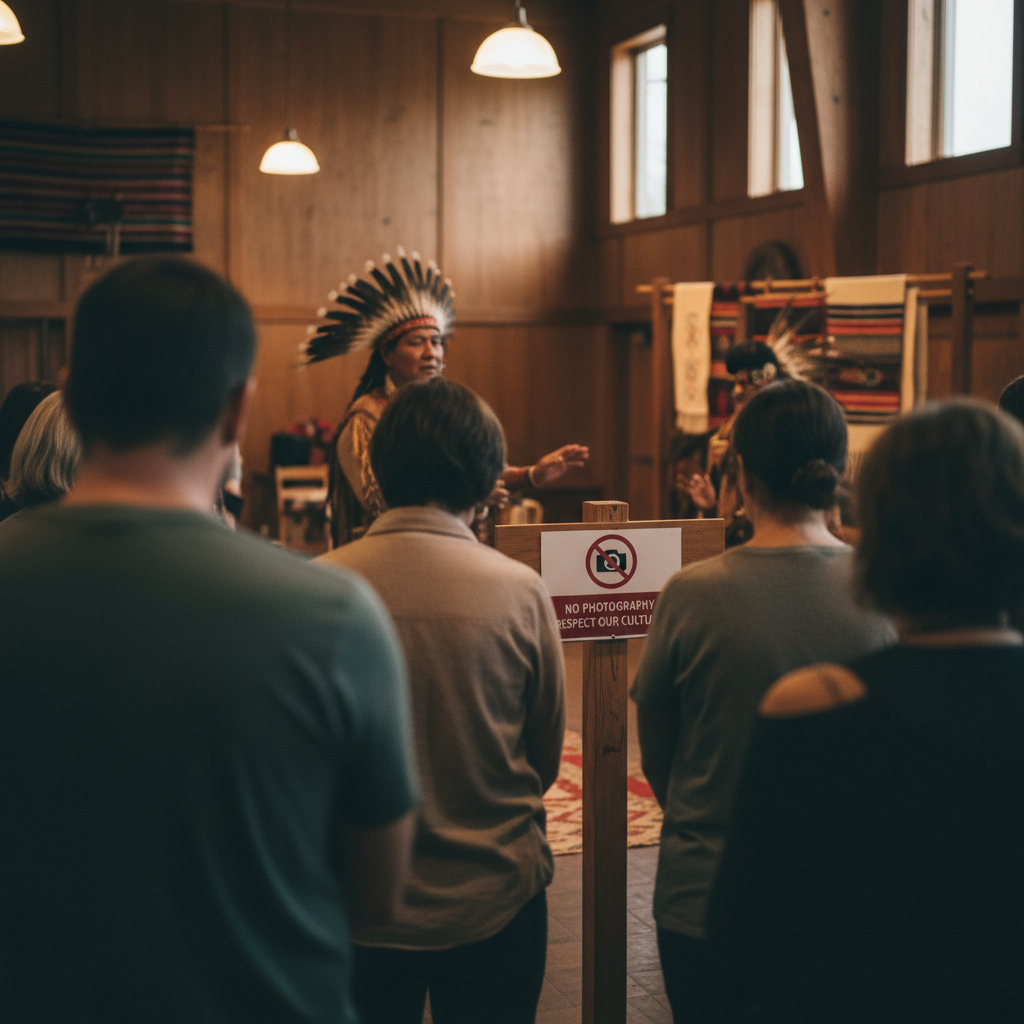
Indigenous travel tourism becomes respectful in the small moments: asking before photographing, listening without interrupting, and not pushing for stories someone did not offer.
Do this (it works in most situations)
- Ask consent plainly: “Is it OK if I take a photo here?” and accept a no without negotiating.
- Follow site rules even if they feel strict, especially around burial grounds, petroglyphs, and ceremonial spaces.
- Credit creators if you post, include the business name and artist name when permitted.
- Buy fewer, better items directly from artists or verified Indigenous sellers, provenance matters.
Avoid this (it tends to backfire)
- Asking someone to speak for “all Native people” or comparing nations like they’re one culture.
- Pressing for trauma narratives, boarding school stories, or “what happened to your people,” unless the guide chooses that topic.
- Touching regalia, drums, or items on display without explicit permission.
- Using sacred terms casually, if you’re unsure, mirror the language your host uses.
According to UNESCO, intangible cultural heritage includes living traditions and knowledge passed through generations, which is a helpful reminder that culture isn’t a product on a shelf, it’s relationships, responsibilities, and context.
Practical steps: build a respectful itinerary in 30 minutes
If planning feels overwhelming, keep it simple. You’re aiming for a trip that makes room for learning and avoids extractive “must-capture” pacing.
A quick workflow
- Pick one anchor experience that is Indigenous-led, a tour, museum program, food experience, or workshop.
- Read protocols carefully and decide now whether you can follow them, if not, choose another activity.
- Plan buffer time around it, rushing makes people push boundaries.
- Choose where your money goes for meals and shopping, look for Indigenous-owned cafes, markets, galleries.
- Decide your content rules before you arrive, what you will not film or post, and why.
Key takeaways to keep in your notes app
- Pay the right people: ownership and benefit-sharing matter more than branding.
- Consent beats convenience: no photo is a complete sentence.
- Culture is living: avoid “perform for me” expectations.
- Boundaries are part of the experience: restrictions can be the respectful option.
If you travel with kids or a group, share these expectations upfront, it prevents that one person from turning a learning moment into a tense situation for everyone.
Safety, access, and when to seek local guidance
Some Indigenous destinations include remote roads, extreme heat, or limited cell service, and cultural sites may be sensitive or legally restricted. Even with good intentions, visitors can end up in unsafe situations or trespass without realizing.
- Check land status: public land, Tribal land, private land all have different rules.
- Use official sources for closures and permits, not just map pins.
- Health and safety: if you’re doing hikes, water activities, or high altitude travel, your risk varies, consider asking a local outfitter or a medical professional if you have conditions that could be affected.
- If you’re unsure, ask a visitor center, Tribal tourism office, or your guide before you go off-route.
Many communities have restrictions around certain ceremonies, burial areas, and recordings, if a guide says a topic or location is off-limits, treating that as a hard boundary is part of respectful participation.
Conclusion: travel with curiosity, spend with intention
Done thoughtfully, indigenous travel tourism is not about collecting “authentic moments,” it’s about accepting that you’re a guest, and letting community priorities shape what you see and share.
If you want two concrete next steps, start by choosing one Indigenous-led experience you can book directly, then set your personal photo and posting rules before the trip, so you’re not improvising in front of someone else’s culture.
FAQ
How can I tell if an Indigenous tour is actually community-led?
Look for Indigenous ownership or a formal partnership stated clearly, named guides or cultural leads, and transparent language about where proceeds go. If everything feels vague, ask direct questions before booking.
Is it okay to take photos during cultural demonstrations?
Sometimes yes, sometimes no, and the “no” can apply to specific moments. Ask first, follow posted signs, and if permission is granted, avoid close-ups of faces unless invited.
What’s the difference between Indigenous-inspired and Indigenous-owned?
Indigenous-inspired usually means design motifs or themes, Indigenous-owned means the business is owned and controlled by Indigenous people. For respectful impact, ownership and governance generally matter more than aesthetics.
Are museums part of Indigenous travel tourism, or only tours on Tribal lands?
Museums, cultural centers, and artist markets can be great options, especially when curated or advised by Indigenous communities. Check whether exhibits involve Tribal consultation and whether the shop sells verified Indigenous-made work.
What should I do if I accidentally break a cultural protocol?
Stop, apologize briefly without overexplaining, and follow the guidance you’re given. Making it a big scene often shifts emotional labor onto your host, a quiet correction usually lands better.
Is it respectful to ask about painful history?
It depends on the setting and who is speaking. Many guides choose to teach that history, but it’s rarely appropriate to pressure someone into personal trauma stories; let the host lead, and ask permission if you’re unsure.
How do I buy Indigenous art without supporting fake “Native-style” products?
Buy directly from artists, Tribal-run markets, or reputable galleries that list artist names and nation/tribal affiliation. If provenance is missing and pricing looks like mass retail, it may not be authentic.
If you’re planning a trip and want a more straightforward path, focus on experiences that publish clear protocols and community benefit notes, and build your itinerary around those instead of trying to retrofit respect onto a checklist at the last minute.