
how to plan a cross country road trip usually comes down to three real problems: too many route options, a fuzzy budget, and the fear of missing something important until you’re already on I-70 with no signal.
The good news is you don’t need a perfect plan, you need a plan that matches your travel style, your car, and your tolerance for long driving days. Once those three align, the rest becomes manageable.
This guide walks through route choices, timing, realistic costs, lodging strategy, car prep, and a simple day-by-day framework, plus a few “wish I’d thought of that” details people tend to remember too late.

Decide what “success” looks like before you touch a map
Most planning stress comes from trying to optimize everything at once: fastest route, cheapest gas, best views, zero backtracking, and every national park. That’s not a plan, that’s a spreadsheet fight.
Pick your priority, then let it drive your decisions:
- Time-first: you want to cross quickly, fewer stops, more interstate driving.
- Scenery-first: you’ll trade speed for coastal roads, mountain passes, or desert routes.
- Experience-first: cities, food, music, odd roadside stuff, a looser schedule.
- Budget-first: fewer paid attractions, more free public lands, smarter lodging nights.
Write a one-sentence goal, even if it feels cheesy, because it becomes your tie-breaker later. Example: “We’re doing a comfortable 12-day drive with national parks, no more than 6 hours driving most days.”
Route planning: pick a corridor, then design your “stops rhythm”
When people ask how to plan a cross country road trip, they often jump straight to Google Maps. I’d start one layer above that: choose a corridor, then figure out how often you want real stops.
Common cross-country corridors (rough idea, not rules)
- Northern: cooler weather in summer, big skies, some seasonal closures at altitude.
- Central: efficient interstate options, easy to stack mid-sized cities, straightforward pacing.
- Southern: winter-friendly, can be brutally hot in summer, great for desert landscapes.
- Coastal-focused: scenic, slower, higher lodging costs in many areas.
Then set a “stops rhythm” that matches how you actually travel:
- Micro-stops: 10–20 minutes, viewpoints, snacks, quick photos, bathroom breaks.
- Half-day stops: 2–4 hours, museum, short hike, food crawl, neighborhood wandering.
- Anchor stops: 1–3 nights, national parks, big cities, visiting friends, reset days.
Practical tip: build the trip around 3–5 anchor stops, then connect them with reasonable driving days. Everything else becomes optional.
Set a realistic timeline (and don’t underestimate “road time”)
Driving “6 hours” almost never stays 6 hours once you add gas, food, roadwork, weather, and that one place you swear will be a quick stop. Many days end up 1–2 hours longer than the GPS estimate.
Try this pacing guideline for a typical cross-country drive:
- Comfortable: 4–6 hours driving per day, best if you want hikes and early dinners.
- Balanced: 6–8 hours driving per day, common for 8–14 day trips.
- Push mode: 9–11 hours driving per day, doable but draining, plan recovery time.
According to National Highway Traffic Safety Administration (NHTSA), drowsy driving increases crash risk, so it’s smart to treat fatigue like bad weather: plan around it, not through it.

Budget the trip with a simple table (gas is only one line item)
A cross-country budget usually breaks because of small daily costs stacking up: snacks, park fees, parking, one “nice dinner,” and lodging spikes in popular areas. If you plan those categories upfront, you’re less likely to feel nickeled-and-dimed on the road.
Here’s a starter budget table you can copy and adjust. Use ranges if you’re unsure, because prices vary a lot by state, season, and vehicle.
| Cost category | How to estimate | Quick control lever |
|---|---|---|
| Fuel | Total miles ÷ your MPG × average gas price | Slow down, combine errands, choose efficient corridors |
| Lodging | Nights × average nightly rate (weekday/weekend varies) | Mix hotels with budget stays, avoid peak areas on weekends |
| Food | Per-person daily average × days | Grocery breakfasts, pack lunches, pick 2 “splurge” meals |
| Attractions & parks | Entry fees + tours + parking + permits | Choose a few paid highlights, prioritize free viewpoints/hikes |
| Car costs | Maintenance + tires risk buffer + tolls | Pre-trip inspection, keep a contingency fund |
| Buffer | 10–20% of total plan | Decide ahead what you’ll use it for |
Key point: budgeting isn’t about being cheap, it’s about protecting the parts you care about, like a better hotel near a park or an extra rest day.
Booking strategy: what to reserve vs keep flexible
People overcorrect here: either they reserve every night and feel trapped, or they reserve nothing and end up paying whatever’s left at 9 p.m. A middle approach tends to work best.
Usually worth reserving in advance
- First 1–2 nights: start calm, especially after a long work week.
- Anchor stops: national parks, popular beach towns, major events, weekend city stays.
- Any “must-do” tour: limited slots, timed entry, ferry schedules.
Often safe to keep flexible
- In-between driving days in less tourist-heavy areas
- Extra “weather days” where you might reroute
- Spontaneous stopovers when you find a place you like
According to National Park Service (NPS), many high-demand parks and activities use reservation systems or timed entry at certain times of year, so check each park’s official page early if parks are central to your plan.
Vehicle prep and safety: small checks that prevent big headaches
How to plan a cross country road trip isn’t only about routes, it’s also about reducing the odds of a trip-killer problem, like tire trouble in a remote area or brakes that start squealing on day three.
Pre-trip checklist (a quick, realistic version)
- Tires: tread depth, pressure, and a plan for flats, including your spare or repair kit.
- Fluids: oil, coolant, windshield washer fluid, and any leaks your car already “sort of” has.
- Battery: older batteries can fail without drama, consider a test if it’s aging.
- Brakes: if you’re heading into mountains, this matters more than you think.
- Wipers and lights: cheap fixes, huge visibility impact.
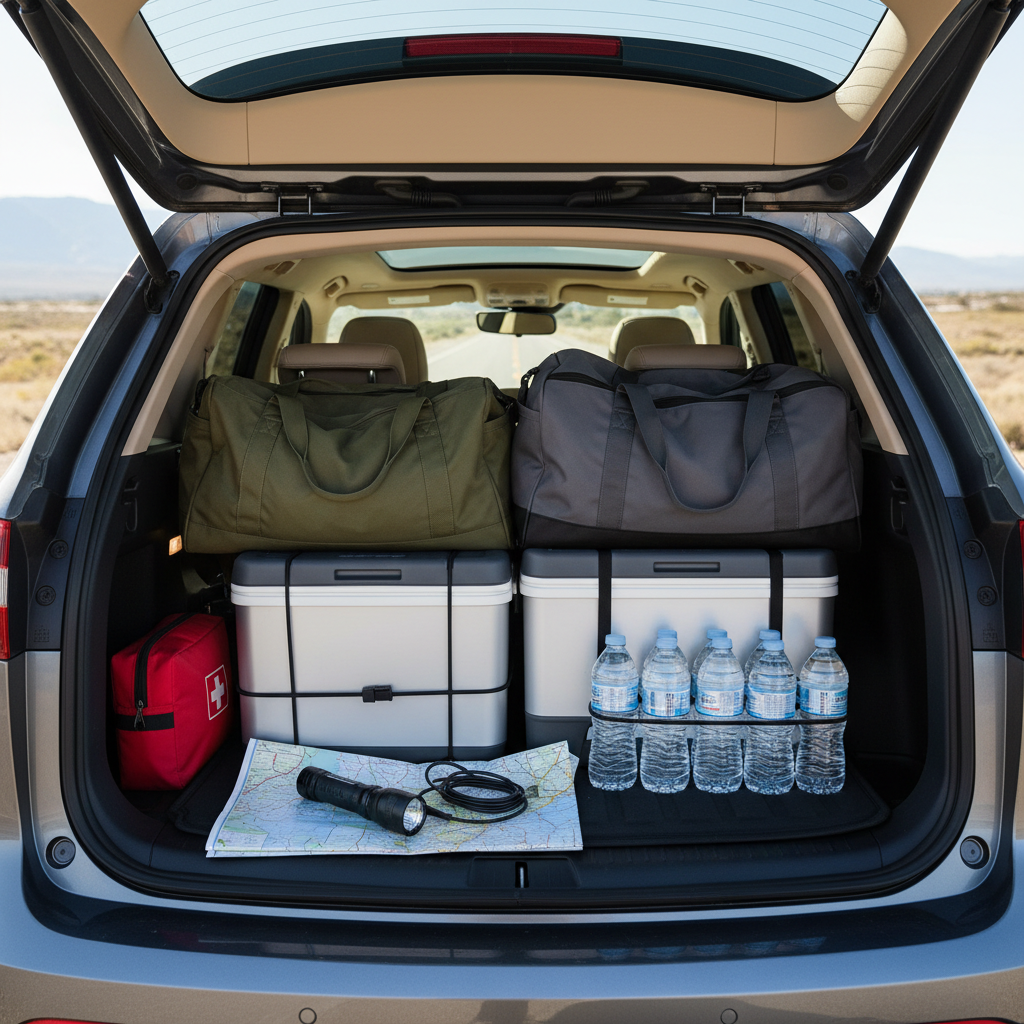
Pack a small kit that you’ll actually use: flashlight, basic first aid, charging cables, water, and a paper map or offline maps. According to American Red Cross, basic emergency preparedness includes having supplies like water, first aid, and a flashlight available, which fits road trips well too.
Build a day-by-day plan you can actually follow
Here’s a simple template that keeps your plan structured without turning it into a rigid schedule. Use it to sketch each day in 5 minutes.
- Morning start time: when you realistically roll out, not your fantasy version.
- Driving block 1: 2–3 hours, then a real break.
- Main stop: one “point” for the day, lunch, short hike, museum, whatever fits.
- Driving block 2: another 2–3 hours.
- Arrival target: aim to arrive before dark when possible, especially in unfamiliar places.
- One optional detour: only one, otherwise the day expands endlessly.
Key takeaway: one meaningful stop per day feels satisfying, two can feel rushed, three usually becomes chaos unless you’re in a city and not driving far.
Common mistakes that make road trips harder than they need to be
These come up a lot, especially for first-timers doing a long route across multiple states.
- Overstuffing the itinerary: if everything is a “must,” nothing is enjoyable.
- Ignoring elevation and weather: mountain routes, desert heat, and storms can change plans fast.
- Chasing the cheapest lodging nightly: saving $20 sometimes costs you two hours driving.
- Not planning food at all: hunger turns into expensive, low-quality choices, and bad moods.
- Assuming cell service: many scenic areas have gaps, offline maps help a lot.
If you’re traveling with kids, older adults, or anyone with medical considerations, it may help to talk with a clinician about travel needs, medications, or altitude concerns, since comfort and safety can vary by person.
Conclusion: a solid plan is flexible, not perfect
Once you pick your priority, set a sane driving pace, and budget beyond gas, planning starts to feel straightforward. The best cross-country trips leave room for a great diner you didn’t research, a sunset you didn’t schedule, and a day where you just stop early.
If you want a simple next step, draft your 3–5 anchor stops tonight, then map the driving days between them, that single move turns “someday” into a trip you can book.