
Best travel hacks for packing light start with one uncomfortable truth: most people don’t pack “too much,” they pack “too uncertain.” You toss in extras for every possible scenario, then your bag gets heavy, messy, and annoying to carry.
The payoff for packing lighter isn’t just saving on checked-bag fees, it’s smoother airport days, faster hotel check-ins, and less time digging for stuff you swear you brought. It also makes last-minute changes easier, like switching trains or walking a few extra blocks.
This guide focuses on the packing moves that actually work in real trips, not fantasy minimalist setups. You’ll get a quick self-check, a repeatable packing framework, and a few small gear choices that usually make a big difference.
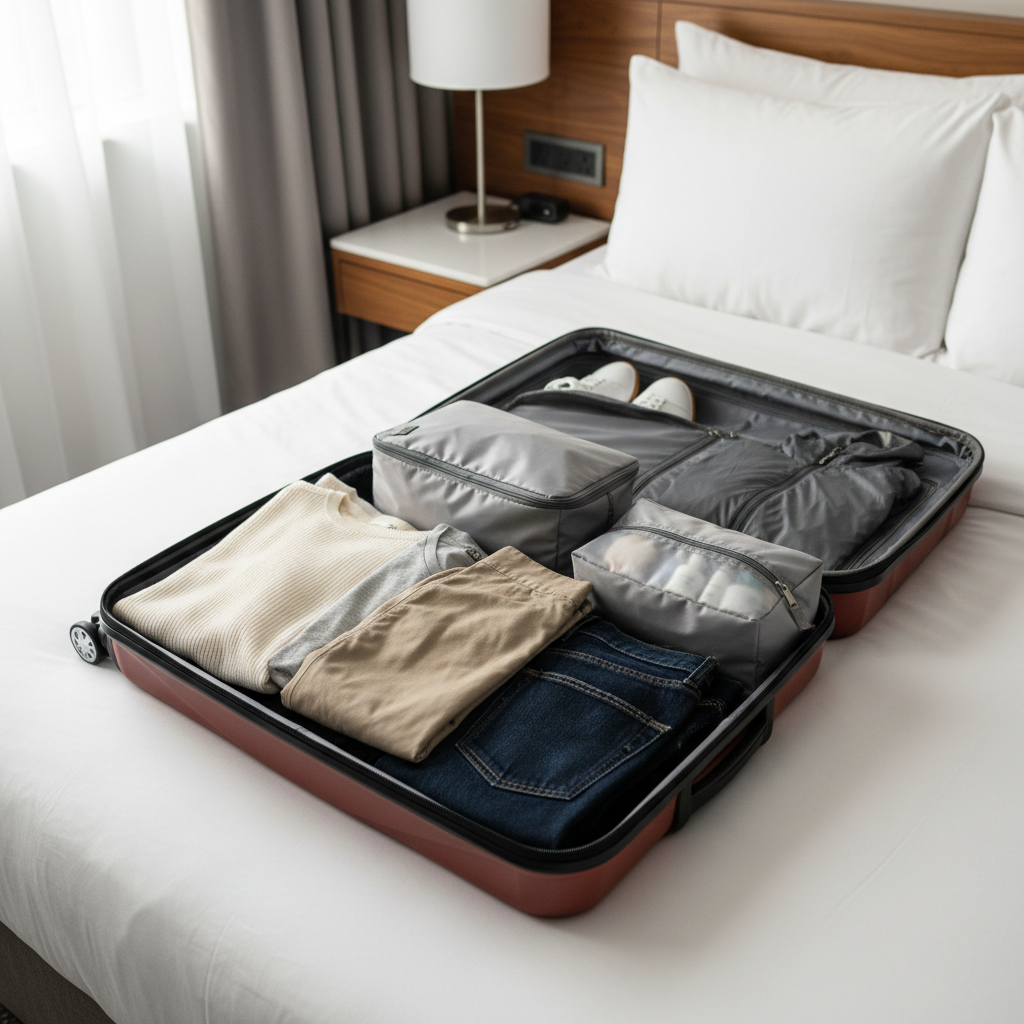
Pack light by design: pick the trip “constraints” first
If you decide your limits before you touch a suitcase, lighter packing becomes almost automatic. The constraints do the arguing for you when you feel tempted to add “just one more thing.”
- Bag limit: carry-on only, personal item only, or one checked bag. If you can, commit to carry-on.
- Laundry plan: no laundry, sink laundry, or one laundromat stop. This choice determines your clothing count.
- Weather tolerance: are you okay re-wearing a mid-layer, or do you want a fresh layer daily?
- Shoe limit: most trips work with 2 pairs, one worn, one packed.
According to the Transportation Security Administration (TSA), liquids in carry-ons generally follow the 3-1-1 rule, so your toiletry strategy needs to fit the reality of security screening, not your bathroom shelf.
A fast self-check: why your bag keeps getting heavy
Before you “optimize,” pinpoint what’s bloating your load. In most cases, it’s one of these patterns, not everything at once.
- Outfit anxiety: too many “what if” clothes, not enough mix-and-match.
- Duplicate gear: multiple chargers, extra toiletries, backup accessories.
- Too many categories: gym kit + hiking kit + dinner kit for a 3-day trip.
- Bulky comfort items: heavy hoodie, large towel, full-size hair tools.
- No system: loose items end up overpacked because you can’t see what you already packed.
If two or more points feel familiar, you don’t need more “tips,” you need a tighter packing method and a clearer list.
Use a simple capsule wardrobe (and stop packing “single-purpose” clothes)
The quickest route to the best travel hacks for packing light is building outfits that share the same colors and layers. You’re not packing items, you’re packing combinations.
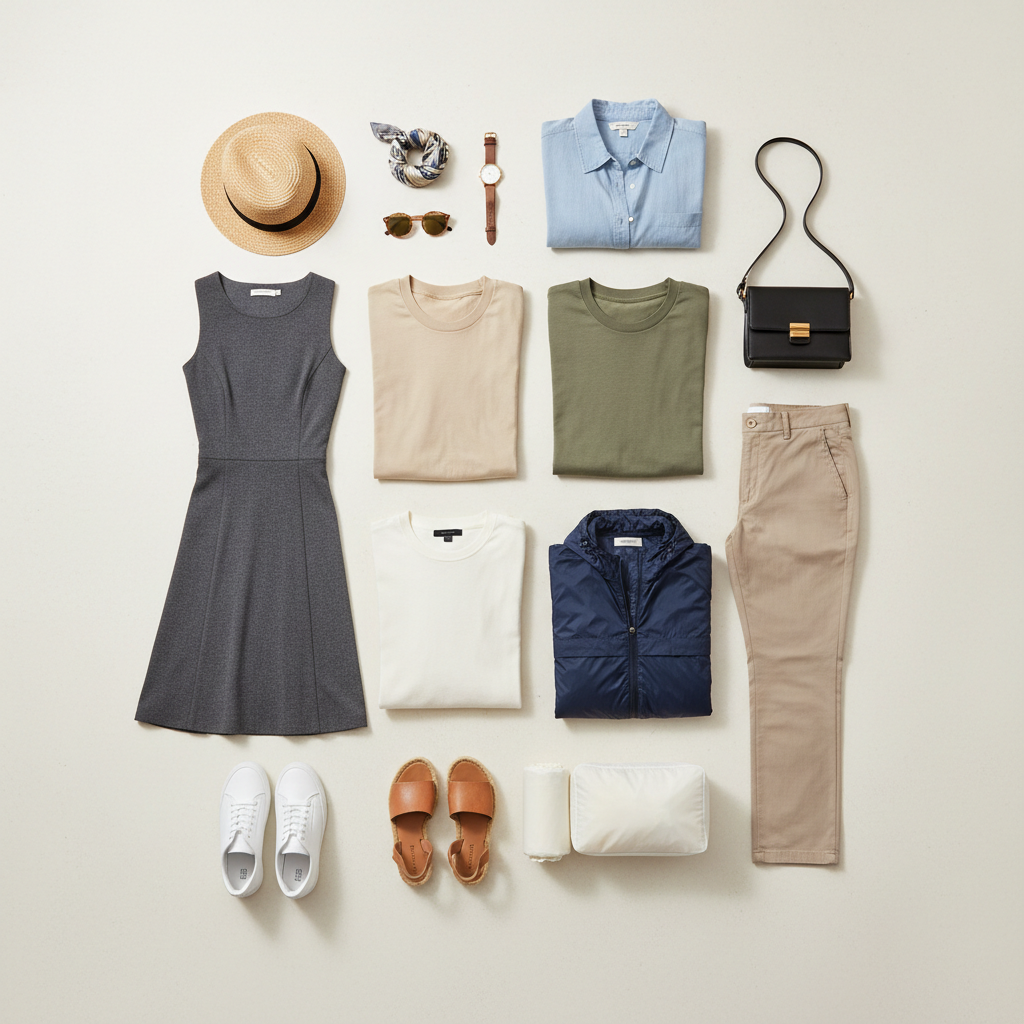
A practical 5–4–3–2–1 starter set
This isn’t a rule, it’s a baseline that often fits a 4–7 day trip with laundry once. Adjust based on climate and dress code.
- 5 tops (mix casual + one nicer option)
- 4 underwear + socks sets (more if you won’t do laundry)
- 3 bottoms (or 2 bottoms + 1 dress/jumpsuit)
- 2 mid-layers (sweater, overshirt, fleece)
- 1 outer layer (packable rain jacket or light coat)
Try to avoid single-use pieces like “only works with one outfit” shoes or “only for one dinner” jackets unless the trip truly demands it.
Quick outfit stress test
- Can every top work with every bottom?
- Do you have at least one outfit that feels acceptable for your nicest planned moment?
- Can you layer for a temperature swing without adding a second bulky jacket?
Compress without chaos: packing cubes, rolling, and one “open space” rule
Packing cubes are popular because they shrink volume, but the real win is clarity. You can see what you packed, and you’re less likely to add duplicates.
- Roll vs fold: rolling often saves space for knits and casual wear, folding can protect structured items. Mixing both usually works best.
- Cube by function: one cube for tops, one for bottoms, one for underwear/socks. Keep it boring.
- Open space rule: leave 10–15% empty. If your bag is “perfectly full,” it won’t close well after day one.
Many travelers also pack a thin tote or packable day bag inside the suitcase, so your carry-on stays streamlined while your daily carry stays comfortable.
Toiletries: go smaller, go solid, and choose one “hero” kit
Toiletries quietly ruin lightweight packing because they’re dense, leak-prone, and easy to overpack. A small, consistent kit beats rebuilding a new one each trip.
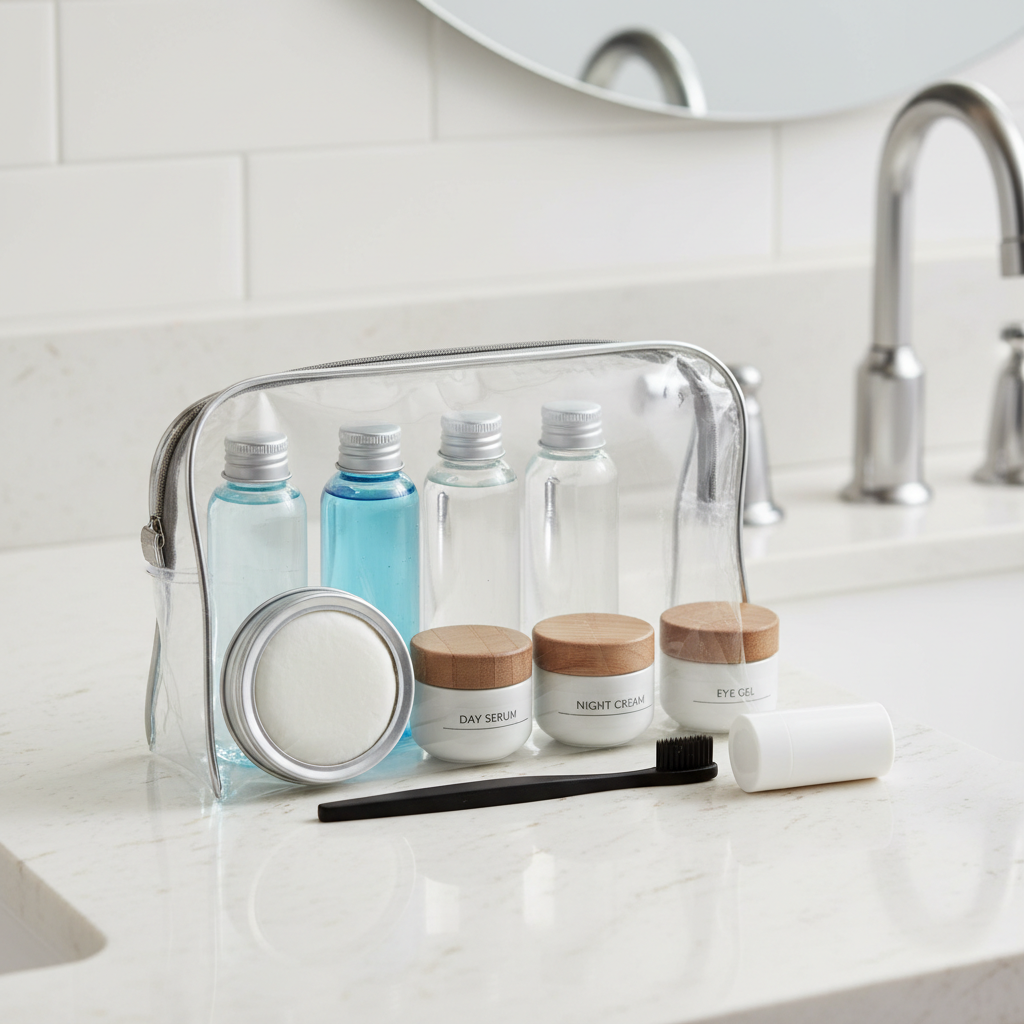
What usually works (and what often backfires)
- Solid options: shampoo bar, soap bar, solid sunscreen stick, solid fragrance. Less leaking, easier TSA compliance.
- Refillables: bring 1–2 small bottles you actually refill, not a drawer of empty minis.
- Skip “just in case”: full first-aid kits, multiple hair products, extra colognes tend to add weight fast.
According to the U.S. Food and Drug Administration (FDA), some personal care items have specific labeling and safety guidance; if you have sensitive skin or medical needs, it may be wise to consult a healthcare professional before swapping products for travel-size alternatives.
A simple toiletry checklist
- One cleanser or soap
- One moisturizer or all-in-one face/body lotion
- One sunscreen
- One deodorant
- Dental basics
- Any essential medications (packed per your clinician’s guidance)
One-bag tech: reduce cables, reduce stress
Tech is another sneaky category where duplicates pile up. Keep it tight and intentional, especially for short trips.
- One charger strategy: one multi-port wall charger, one short cable, one longer cable if needed.
- Universal where possible: USB-C devices simplify everything. If you can’t switch, label cables so you don’t pack extras “to be safe.”
- Power bank: useful, but match it to your day length. Bigger isn’t always better for weight.
According to the Federal Aviation Administration (FAA), spare lithium batteries and power banks typically need to go in carry-on baggage, so plan your packing layout around easy access.
A realistic packing table you can copy-paste
If you want a quick plan without overthinking, this table covers common trip types. Use it as a starting point, then tweak for weather and dress code.
| Trip type | Clothing approach | Shoes | Toiletries | Notes |
|---|---|---|---|---|
| Weekend city trip (2–3 days) | 2–3 tops, 1–2 bottoms, 1 mid-layer | 1 worn + optional packable pair | Strict TSA-size, solids if possible | Plan one “nice” outfit without adding a blazer unless required |
| Work trip (3–5 days) | Capsule around 1–2 core bottoms, repeat layers | 1 dress shoe + comfortable walking shoe | Keep grooming minimal, avoid full-size hair tools | Wear the bulkiest shoe and jacket during transit |
| Warm-weather vacation (5–7 days) | Lightweight fabrics, laundry once if needed | Sandals + sneaker | After-sun and SPF matter, decant carefully | Bring one layer for A/C and evenings |
| Cold-weather trip (4–7 days) | Base layers + re-wearable mid-layer | Boot + casual shoe if space allows | Moisturizer, lip balm, smaller liquids | Outerwear gets bulky, consider wearing it on travel days |
Common mistakes that feel smart but usually add weight
Some choices sound efficient, then punish you on day two. If you’re chasing the best travel hacks for packing light, these are the “quiet traps” to watch.
- Packing for your fantasy self: the running shoes, the novel, the “just in case” outfit, all untouched.
- Over-optimizing organization: too many pouches, too many tiny containers, too many gadgets.
- Ignoring fabric behavior: cotton can get heavy and slow-dry, performance blends often pack smaller and wash easier.
- Filling every pocket: a heavy personal item feels worse than a slightly heavier carry-on.
Quick key takeaways (save this for next trip)
- Decide constraints first, especially shoes and laundry, then build your list around them.
- Pack outfits, not items, and keep colors consistent.
- Use one toiletry kit that stays travel-ready, with solids and refillables.
- Leave a little space so your bag stays usable after you repack on the road.
Closing thoughts: lighter packing is a habit, not a perfect list
The best part about lighter travel is how quickly it compounds: once you take one trip with less stuff, you trust yourself more on the next one, and the “just in case” pile shrinks without a fight.
Pick one change for your next trip, either a capsule wardrobe or a smaller toiletry kit, then keep that system in place. If you want a simple benchmark, aim for a carry-on that still feels easy to lift overhead, even after you buy a couple things on the way back.