
The best travel backpack for men waterproof is the one that matches your trip length, carry style, and weather exposure, not just the highest “waterproof” claim on a product page.
If you have ever arrived with a damp laptop sleeve or a musty change of clothes, you already know why this matters, water protection is a system, fabric, seams, zippers, and even how you pack all play a role.
This guide helps you choose with fewer guesses, you will see what “waterproof” usually means in real use, a quick self-check, a comparison table, and practical buying tips for 2026 shopping.
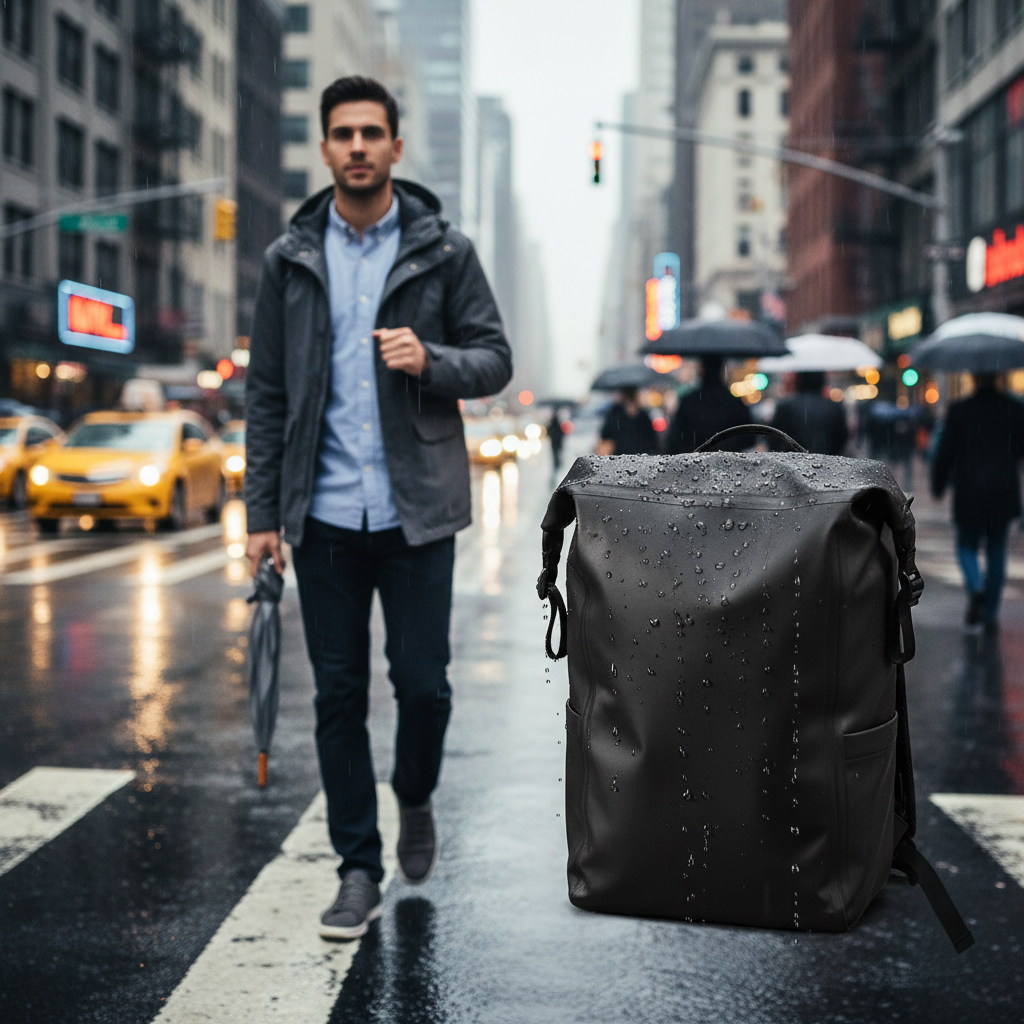
What “waterproof” really means for travel backpacks
Brands use “waterproof” loosely, so you want to translate marketing into the parts that actually keep water out.
- Water-resistant usually means it can handle light rain for a while, fabric has a coating but seams and zippers may leak.
- Waterproof implies the bag can resist sustained rain, often with sealed seams and highly water-blocking zippers, sometimes an IP rating if it is a roll-top dry bag style.
- Stormproof in practice is about failure points: zipper tracks, seam stitching, back panel gaps, and the top opening where water pools.
According to NOAA, weather conditions can change quickly and vary by region, so choosing for “worst plausible rain” tends to prevent most regret purchases.
Why men’s travel backpacks leak: common real-world failure points
Most leaks do not come through the main fabric, they come from the construction details that look minor until you stand in a downpour.
- Zippers: standard coil zippers shed some water, but wind-driven rain pushes through, laptop compartments often suffer first.
- Seams: needle holes become channels, especially on front pockets and bottle sleeves.
- Top openings: clamshell bags can collect water around the zipper curve, water runs inward when you open it.
- Back panel soak-through: the side against your body stays wet longer, water can wick toward inner padding and electronics sleeves.
- Coating wear: abrasion from overhead bins and rough concrete can reduce repellency, usually before you notice visually.
Quick self-check: which “waterproof level” do you actually need?
Before you hunt for the best travel backpack for men waterproof, decide what kind of wet you mean, light drizzle is a different problem than tropical storms or boat transfers.
Pick the scenario that sounds most like you
- City travel + commuting: occasional rain, lots of openings for transit passes, you need reliable zippers and a protected laptop zone.
- Work trips: airports, rideshares, hotel lobbies, you need clean organization and quick access that does not invite water.
- Weekend outdoors: sustained rain is possible, you need tougher face fabric and better seam management.
- Boat, beach, or heavy-wet climates: you may want roll-top or dry-bag-inspired closure, plus an internal dry compartment for electronics.
Two fast questions that decide a lot
- Will you carry a laptop or camera that cannot get wet even once?
- Do you open the bag often while outdoors, or mostly indoors?
If you answered “yes” to the first and “often outdoors” to the second, prioritize zipper protection and internal waterproofing, not just “DWR-coated fabric.”
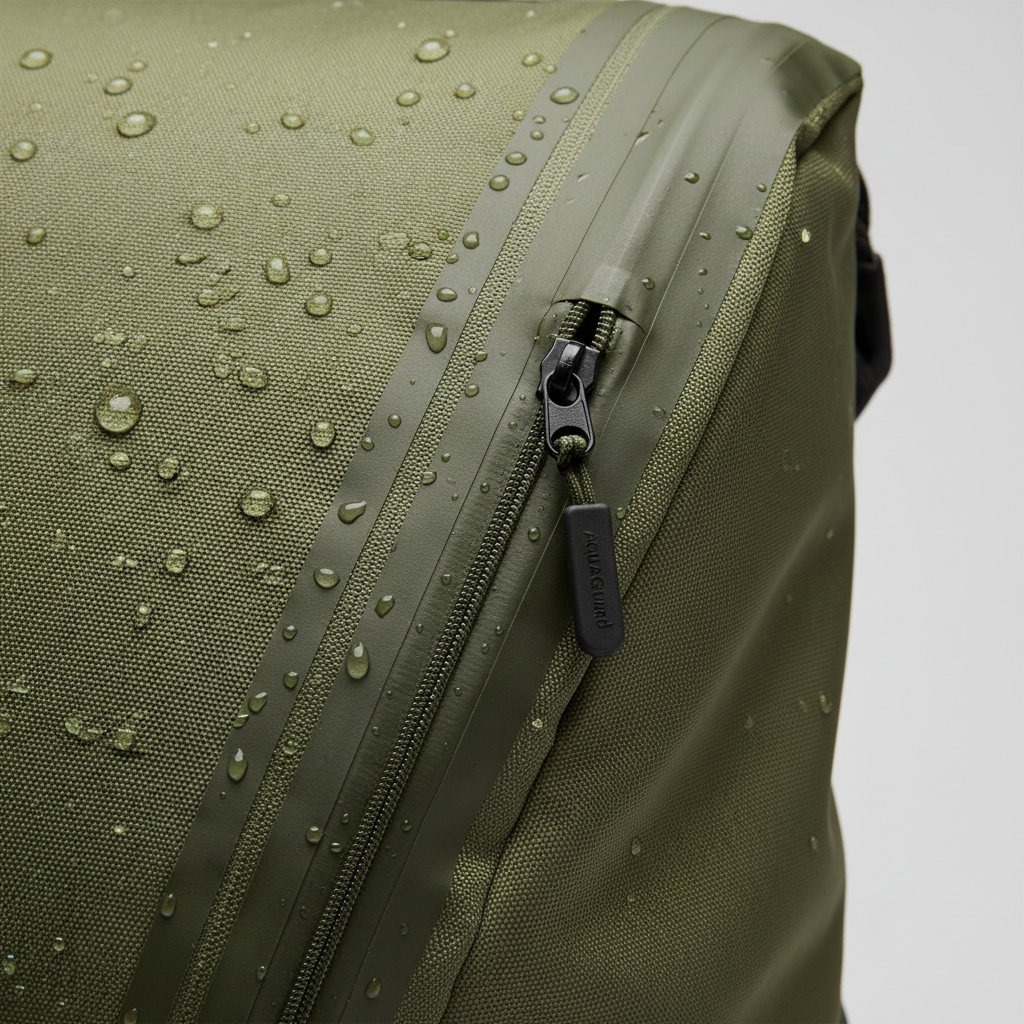
Key features to look for in a waterproof travel backpack (2026 checklist)
You do not need every feature, but you should know which ones actually move the needle when rain hits.
- Fabric: look for coated nylon or polyester with a robust face fabric, many brands use TPU or similar coatings for stronger water blocking.
- Seam strategy: taped seams or welded panels help, especially at the bottom and around front pockets.
- Zipper design: water-resistant zippers, zipper garages, and storm flaps reduce ingress, pay extra attention to laptop compartment zippers.
- Protected laptop compartment: raised bottom and a sleeve that does not sit directly on the base, so puddle contact matters less.
- Back panel drainage: channels that reduce water pooling, plus materials that dry faster.
- Rain cover: not glamorous, but a good cover can outperform “waterproof” claims for long exposure.
- Carry comfort under load: wide shoulder straps, a real frame sheet, and a sternum strap, wet gear gets heavier fast.
Key point: a rain cover plus a good internal laptop sleeve often gives better protection than “waterproof fabric” alone, especially if you open the bag mid-storm.
Comparison table: choose your best match fast
Use this table to narrow the field, then confirm the details on the specific product listing and warranty terms.
| Use case | Best closure style | What to prioritize | Typical trade-offs |
|---|---|---|---|
| Business travel + city rain | Clamshell with protected zips | Water-resistant zippers, laptop lift, quick-access pocket protection | Not ideal for sustained downpour without rain cover |
| One-bag travel (3–7 days) | Clamshell or hybrid roll-top | Durable coated fabric, simple compartments, reliable harness | Heavier bags can feel bulky on day trips |
| Outdoor weekend + variable weather | Roll-top or highly shielded clamshell | Seam control, fewer external pockets, compression straps | Slower access to gear |
| Boat, beach, tropical rain | Roll-top dry-bag style | Welded construction, minimal zippers, internal dry storage | Less organization, laptop carry can be awkward |
How to shop smart in 2026: practical steps that prevent returns
Here is the workflow that usually saves time, because “best travel backpack for men waterproof” searches can spiral into endless specs.
Step 1: Verify what kind of waterproofing is claimed
- Look for clear language about seam taping, welded panels, or water-resistant zippers.
- Be cautious with vague phrases like “weatherproof” without construction details.
- If an IP rating appears, confirm what it applies to, many travel backpacks do not use standardized IP testing.
Step 2: Pressure-test the access points
- Count external pockets and ask, do I need these in rain, or do they add leak points?
- Check if the laptop zipper path sits on top where water pools, curved corners can be weak spots.
- Look for zipper garages at the ends, those tiny fabric housings reduce ingress more than people think.
Step 3: Match size to airline reality, not just liters
Capacity numbers vary by brand, so dimensions and how the bag compresses matter more for carry-on compliance. According to TSA, carry-on size rules can vary by airline and route, so confirm with your airline before flying.
Step 4: Plan your internal waterproofing
- Use a dry bag or packing cube for clothes in wet climates.
- Use a sealed laptop sleeve or a simple waterproof pouch for chargers and power banks.
- Pack a small microfiber cloth, you will wipe moisture off before opening compartments.
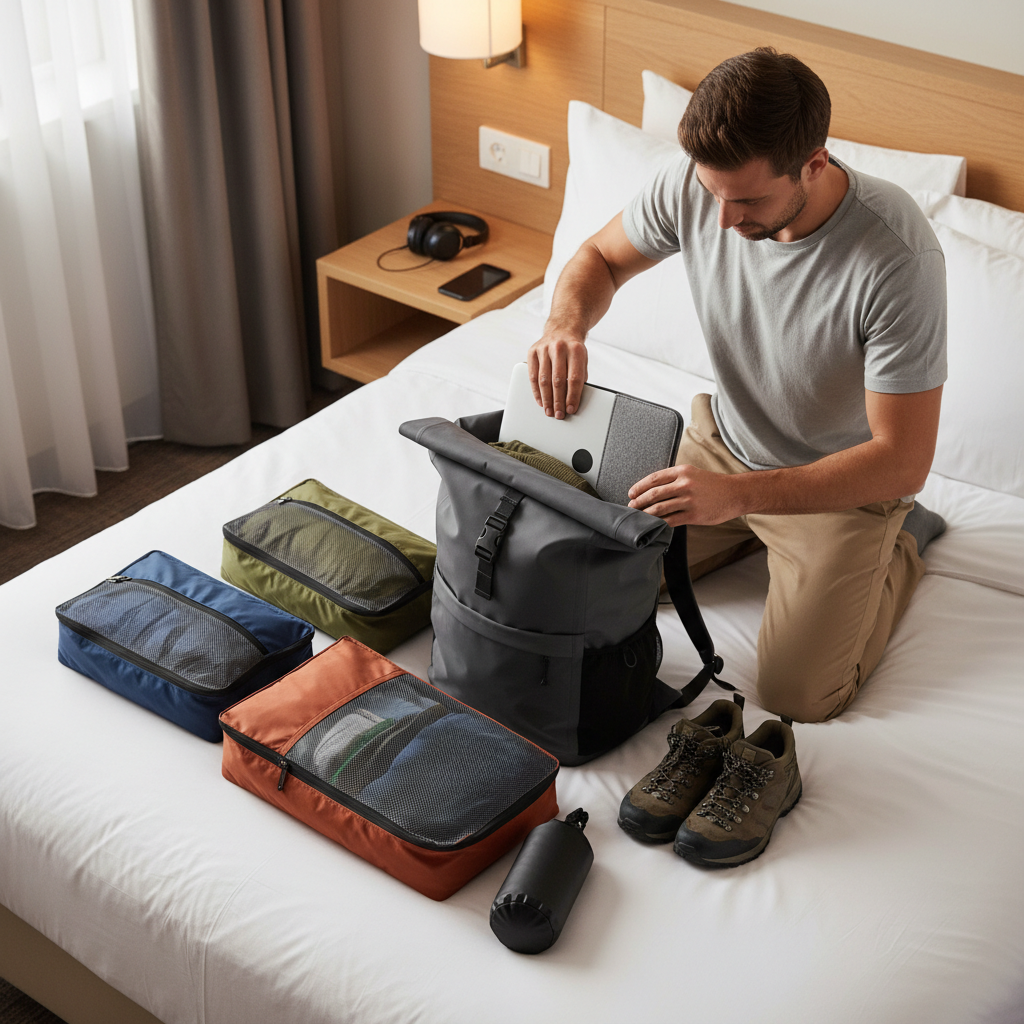
Real-world use tips: keep gear dry even when the bag isn’t perfect
Even a strong pick can fail if water sits on zippers for an hour or you open the clamshell in the rain, these habits help.
- Open under cover: step under an awning or turn your back to wind-driven rain before unzipping.
- Zip direction matters: some zippers shed water better when the pulls meet at the top, experiment at home.
- Electronics go high: pack laptop and camera above the midpoint when possible, bottoms see the most splash.
- Reapply DWR when needed: many bags rely on a water-repellent finish that wears, follow the brand care instructions.
- Use a rain cover early: waiting until everything is wet defeats the point.
If you travel in humid climates, air out the bag at night, trapped moisture causes odor and can degrade coatings over time.
Common mistakes buyers make (and what to do instead)
- Mistake: buying “waterproof” and assuming no extra protection needed. Do instead: protect electronics with an inner sleeve or pouch anyway.
- Mistake: choosing maximum organization pockets. Do instead: prioritize one main cavity plus a protected quick-access pocket.
- Mistake: ignoring carry comfort. Do instead: check strap width, frame sheet, and load lifters if you walk a lot.
- Mistake: skipping warranty and zipper repairability. Do instead: favor brands with clear repair policies, zippers are a common wear item.
Also, be skeptical of “submersible” language unless the bag is clearly built like a dry bag, most travel packs are designed for rain, not underwater use.
Conclusion: how to pick your best waterproof travel backpack
Finding the best travel backpack for men waterproof comes down to being honest about your weather exposure and how you access your gear, then buying for zippers, seams, and a protected laptop setup, not just fabric marketing.
If you want one action to take today, list your top two travel scenarios and choose a bag style from the table, then add a simple internal waterproof plan for electronics. That combination usually beats chasing the most extreme “waterproof” claim.
Quick takeaways
- Zippers and seams decide most real leaks.
- Roll-top wins for heavy-wet environments, clamshell wins for fast travel access.
- Rain cover + inner sleeves often provide the most reliable protection-per-dollar.
FAQ
What is the difference between water-resistant and waterproof travel backpacks?
Water-resistant bags handle light rain for a limited time, waterproof designs usually add seam control and better closures, but even then, zippers and openings can be weak points in long storms.
Are water-resistant zippers enough to protect a laptop?
In many commutes, they help a lot, but for sustained rain or frequent opening outdoors, a dedicated laptop sleeve or waterproof pouch adds a safer second layer.
Is a roll-top always better for waterproofing?
Often, yes for heavy rain because it reduces zipper exposure, but it can slow down access and organization, which matters on business trips and airport days.
How do I know if a backpack has taped seams?
Some listings mention “taped seams” explicitly, otherwise check close-up photos of the interior, taped seams show a thin strip covering stitch lines, if that detail is missing, assume it may not be taped.
Can I make my existing travel backpack more waterproof?
Usually you can improve it with a rain cover, reapplying a DWR spray per product instructions, and using dry bags inside, but you cannot fully fix leaky seams or low-quality zippers without repairs.
What size waterproof travel backpack works best for carry-on?
Many travelers do well in the 30–45L range, but airline rules vary, check your airline’s size limits and compare dimensions, not just liters.
Do waterproof backpacks trap moisture inside?
They can, especially in humid climates, airing the bag out and separating damp items in a dry bag or laundry bag helps prevent odor and material wear.
If you are narrowing down options and want a more confident pick, bring your typical load list and travel scenarios, then compare two or three candidates side by side, if you want, I can help you sanity-check a shortlist based on weather, carry-on needs, and budget.